
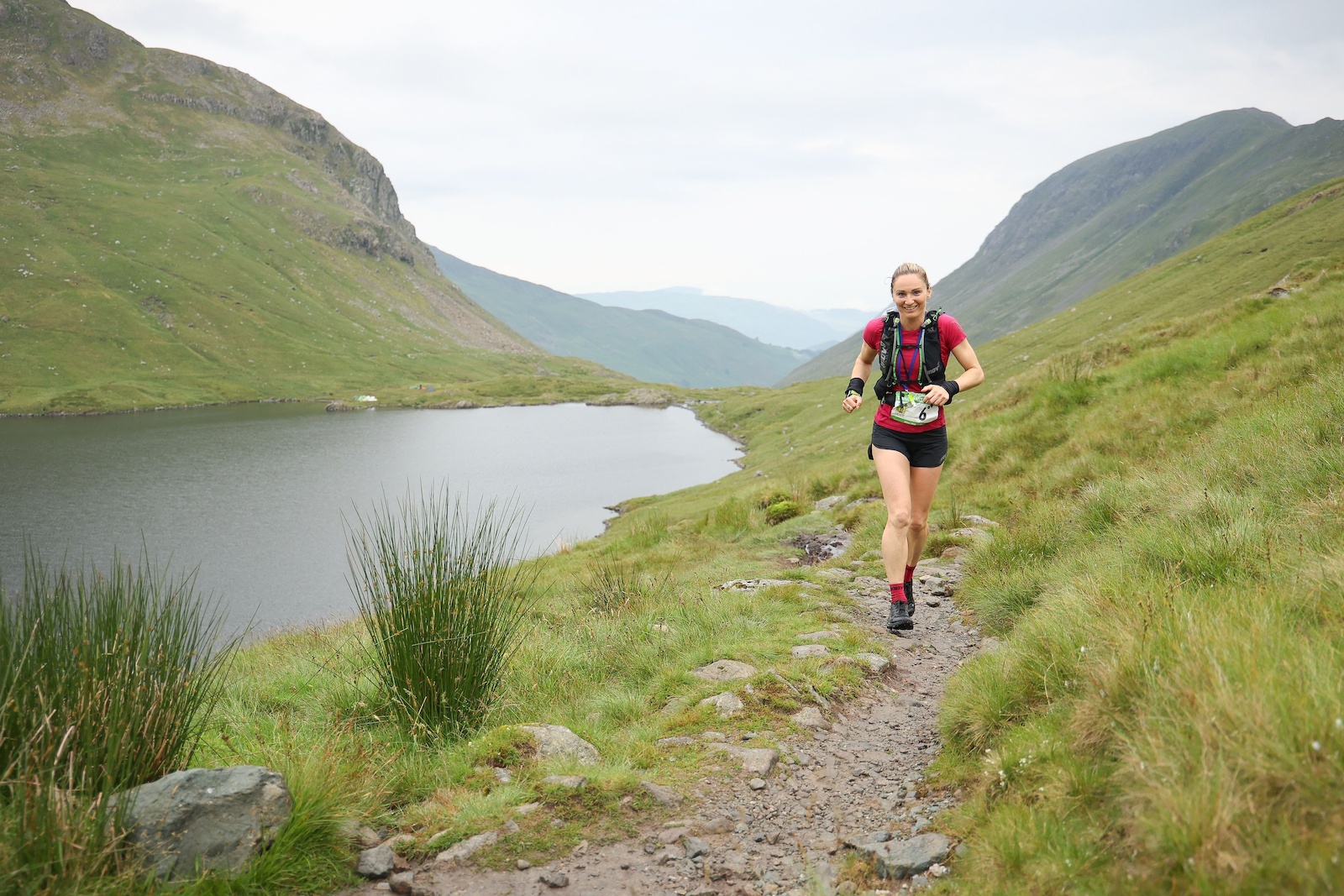
How to best prepare for Lakeland Trails 55k or 100k ultras
Winner of the women’s 2021 Lakeland Trails 100K Meryl Cooper is an ultra-running coach and health & lifestyle coach. In this blog post, she shares her knowledge and experience so you can better prepare for the Lakeland Trails 55k or 100k ultras.
Training:
Although July might seem like a long way away, these races require a lot of endurance. You can’t rush endurance development so you really need to start your training as early as you can (i.e now!). This will allow you to have a really good, long specific endurance block before race day.
Around this time (8 months out from the race), I would recommend lower overall weekly volume in terms of miles, but for you to include higher intensity intervals in a couple of sessions each week. You wouldn’t want to be doing this kind of higher intensity training nearer the race, so getting a good VO2 max block done now – then a more lactate threshold focused block afterwards – will allow you to raise your easy effort pace.
This will then set you up nicely for your endurance block, which will involve long hilly runs with around 200-350m of elevation gain per hour, depending on your target time for the race.
Recce the course:
I would include some recce weekends in the endurance block of your training plan so you know exactly what to expect on race day. This helps to ensure you pick the right kitand plan a really good fuelling strategy. You will also then have a better idea of how long each section might take you on race day.
Make some notes at the time as, if you are like me, you will have forgotten everything a few weeks later! I’ve been guilty in the past of sitting down to plan out my race and realising that I didn’t write any notes post recce. Trust me, it’s worth the effort.
As the 100K starts at midnight, I did my recce of the first few hours of the course in the daytime so I could actually enjoy and see the surroundings of this section too. In total I did the 100K route as a recce over 3 days.
Day 1 – Ambleside to Askham 41K, 1487m.
Day 2 – Askham to Grasmere 32K, 1190m.
Day 3 – Grasmere to Ambleside finish 28.7K, 946m.
Practice running in the dark and eating your race day food:
If you are racing the 100K or if your 55K might go into the night, I really recommend some late night running at some point in your endurance block training. As the nights are very light in the UK summer, it might mess a little with your sleeping pattern, so don’t try it too close to race day.
I went out around 11pm one night in June for a long run and finished around 2am. I discovered on this run that my headtorch wasn’t holding power and also that my stomach didn’t like running after what I’d had for dinner. It was a brilliant learning curve and I was so glad I did it before the race as I was then able to correct these mistakes. The end result was no issues on race day with my head torch or stomach!
Starting a race at midnight was a first for me and a bit of a concern, but testing things out beforehand removed my worries and once I started running the actual race, any feelings of tiredness disappeared. During the day of the race (before the midnight start), I stuck to eating quite plain carbohydrates (e.g. pasta, oats), included some protein and kept fibre and fat low. I did a big carbo-load for a couple days before this too.
Fuelling:
Running for long distances in the hills uses a huge amount of calories. You need to practice your fuelling strategy as much as possible in your endurance block and train your gut to take on carbohydrates whilst running.
In all runs over 2 hours I would recommend practising with full fuelling. If you do not fuel much at the moment, then start with 60g of carbohydrate an hour (e.g two TORQ gels). Build this up to 90g an hour. Some runners will have up to 120g an hour but this will take a long time to train for.
I am not the fastest ultra runner out there, but I fuel well, and this played a crucial part in my win in 2021. Test everything, discover what you like and stick to fast fuelling carbohydrates. For the 100K you might benefit from a small bit of protein (e.g a protein bar or shake in the halfway drop bag) but avoid fats.
Summary:
I hope you find the above useful, helping you achieve your goals on race day and have fun in the months of preparation beforehand. Good luck!